
01
Your About pagesounds like your lawyer wrote it.
Your voice matters. It also sells. Here’s how to get it back onto the page.

The journal / Your voice
On leading with your old title, and why the people in front of you only care about the next part.
By Becky Rickett, founder of VividlyHER. 2 minute read.

You meet someone new. They ask what you do. And out it comes, the whole history.
“Well, I was a VP at a bank for eighteen years, and before that I was in marketing, and then I took some time off with the kids, and now I’m kind of doing my own thing...”
By the time you get to the part that matters, their eyes have glazed a little. Not because they’re rude. Because they asked about now.
Me too. I used to open with “I’ve been designing since 1996, from album covers to websites” like it was a credential they needed before I could speak.
The old title feels safe. It was official. Someone else gave it to us, so nobody can argue with it. The new thing feels unproven, so we hide it behind the résumé.
Lead with today. Let yesterday be the proof.
Harsh, but freeing. The person in front of you is asking one quiet question: can you help me? Your history only matters if it answers that.
So flip the order. Lead with now. Save the history for when they ask how you got so good at it.
Here’s the part most of us skip. After you say what you do in one sentence, stop. Ask them something. Let them tell you what they need.
You’ll learn more in that minute than in your whole introduction. And they’ll remember you as the woman who listened.
Most About pages are a career timeline. Try this instead: one sentence about what you do now, one about who it’s for, then your story, told as proof.
That’s how a VividlyHER site is built. From your conversation, starting with now.
Stop telling them who you were. Tell them who you are.
Your turn
No perfect photo needed. Messy hair welcome. Your camera only turns on when you tap.
Keep reading
Your voice matters. It also sells. Here’s how to get it back onto the page.

The question every woman in business dreads at parties, and a better answer than “oh, it’s kind of hard to explain.”
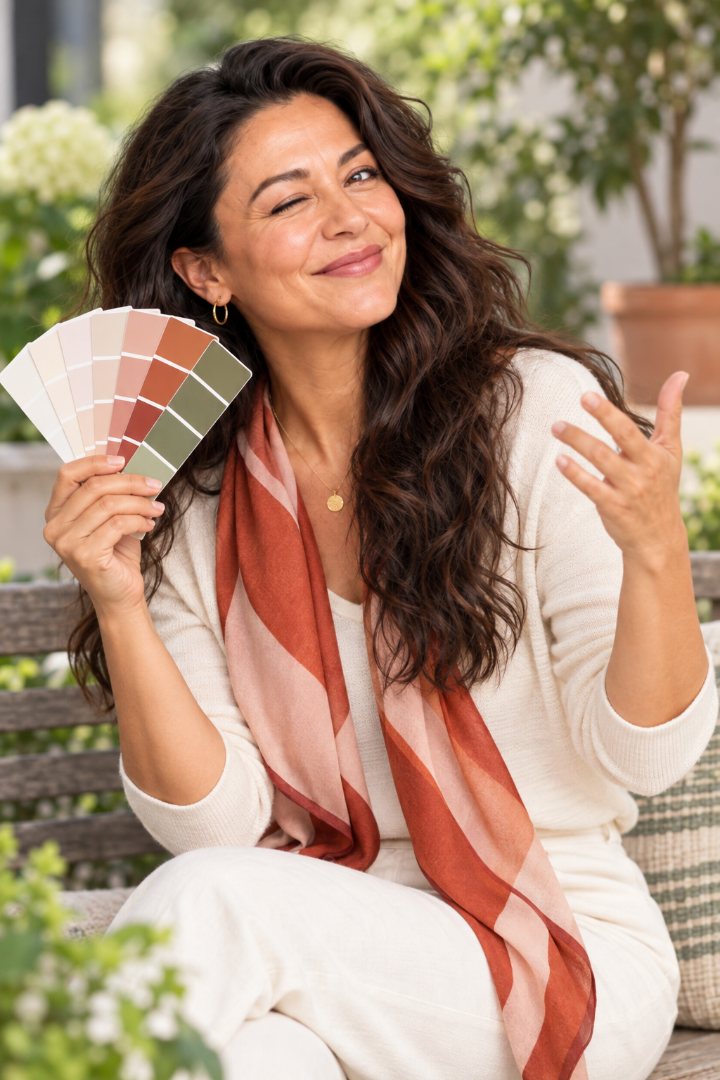
Before anyone reads a word, they feel your colors. A short guide to choosing a palette that sounds like you.